Marie O’Shaughnessy and Jeremy Tatum saw one California Tortoiseshell and two Red Admirals at the top of Mount Tolmie at 5:00 pm today. The tortoiseshell was on the reservoir; the admirals were on the Laburnum just outside the entrance to the reservoir. Below is Marie’s photograph of the tortoiseshell.
California Tortoiseshell Nymphalis californica (Lep.: Nymphalidae) Marie O’Shaughnessy
Ian Cooper writes: Here are six pictures from my May 4th photo shoot along the Galloping Goose Trail in Saanich and View Royal.
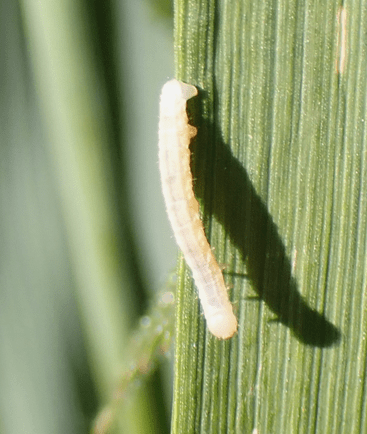
Jeremy Tatum writes, of the first photograph below: Although it is not on any of its usual foodplants, I believe this is a caterpillar of the European Winter Moth, which has become lost.
Probably Winter Moth Operophtera brumata (Lep.: Geometridae) Ian Cooper
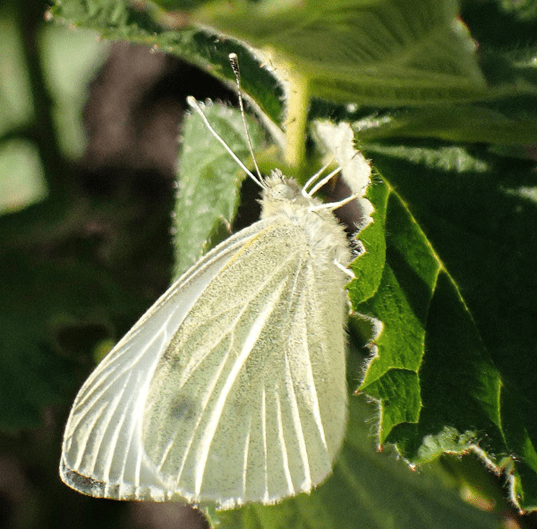
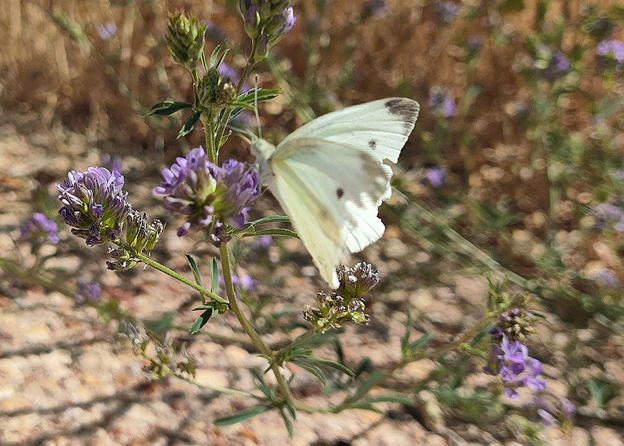
Cabbage White Pieris rapae (Lep.: Pieridae) Ian Cooper
Larva of Seven-spotted Lady Beetle – Coccinella septempunctata (Col.: Coccinellidae) Ian Cooper
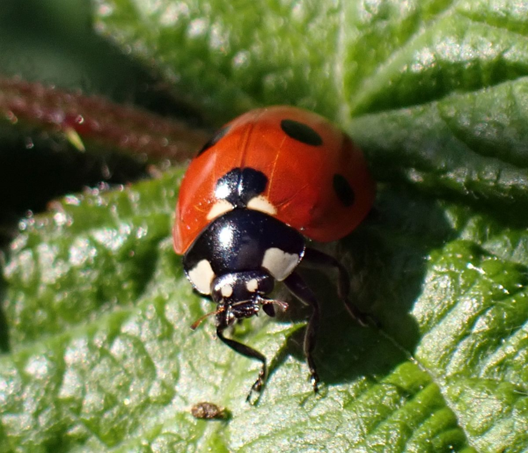
Adult Seven-spotted Lady Beetle – Coccinella septempunctata (Col.: Coccinellidae) Ian Cooper
Picture-winged fly – Chaetopsis fulvifrons (Dip.: Ulidiidae) Ian Cooper
Ancistrocerus/Euodynerus (Hym.: Vespidae – Eumeninae) Ian Cooper
Jeremy Tatum writes: This is a potter/mason wasp of the subfamily Eumeninae. iNaturalist suggests Euodynerus foraminatus. Our Claudia Copley suggests Ancistrocerus sp. I looked up several images in both genera, and it seemed to me that the best fit was Ancistrocerus nigricornis – but that’s a European species that doesn’t seem to have been recorded in North America. But maybe that’s what it is? For the present we’ll have to admit that, at present, we cannot be 100 percent sure of the exact species.
Marie O’Shaughnessy writes: I was delighted to find a Grey Hairstreak among the grass along the berm at Maber Flats . Photo taken by my old cell phone so not good. There were also three Western Spring Azures , and 7 Cabbage Whites .
Over the past month if my observations are correct, Cabbage Whites seem especially abundant in places such as Outerbridge Park, and Martindale Flats along with Western Spring Azures.
I did manage to find as many as 4 California Tortoiseshells at the top of Mount Tolmie, middle of April . Also met Aziza, May 1st at this location and enjoyed another California Tortoiseshell Finally I found 2 Sara Orangetips at the top parking lot of Mount Douglas April 25th. I was thrilled to find my first California Darner sighting, four of them, at Outerbridge Park May 1st. A pair were mating. Two more were seen same day at McIntyre Reservoir. There was one California Darner at Maber Flats May 4th.
Grey Hairsteak Strymon melinus (Lep.: Lycaenidae) Marie O’Shaughnessy
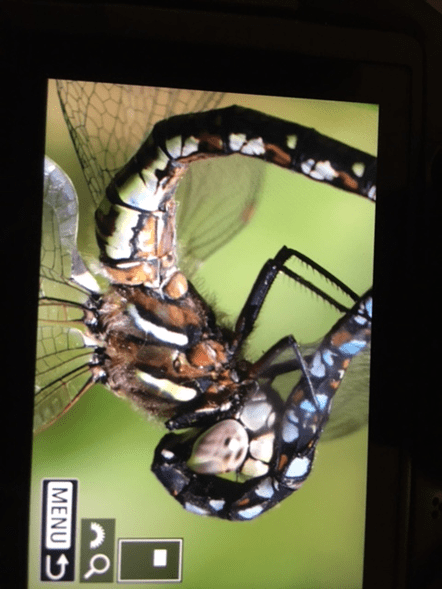
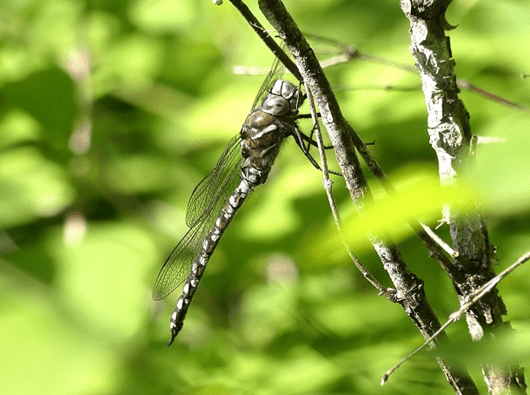
California Darners Rhionaeschna californica (Odo.: Aeshnidae) Marie O’Shaughnessy
Jeremy Tatum writes: I think I must, at some time, have mentioned on this site that it is a help, towards identifying aeshnid dragonflies, to get a close-up lateral shot of the thorax, in order to see the shapes of the thoracic stripes. Marie seems to have taken this to heart.
Aziza Cooper writes : Today, nine participants in the May Butterfly Walk went from Mount Tolmie to Munn Road and to a garden in the Highlands. We found four butterfly species:
Mount Tolmie: 1 Western Spring Azure 1 Cabbage White
Munn Road at Pike Lake: 15 Western Spring Azures 1 Brown Elfin 1 Cabbage White
Private home at Blue Valley Road 1 Green Comma
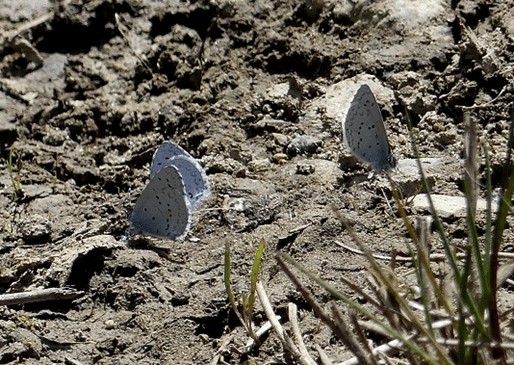
Western Spring Azures Celastrina echo (Lep.: Lycaenidae) Aziza Cooper
Geoffrey Newall writes: I found this interesting butterfly while I was hiking at Goldstream Heights today.
This is the first reported sighting of this species in our area since 2021. This is a slightly darker specimen than usual, and it shows more clearly the “double-banded” pattern after which it gets its English name.
Jeremy Tatum writes:Looks like a Pieris rapae (Cabbage White) evening for me.
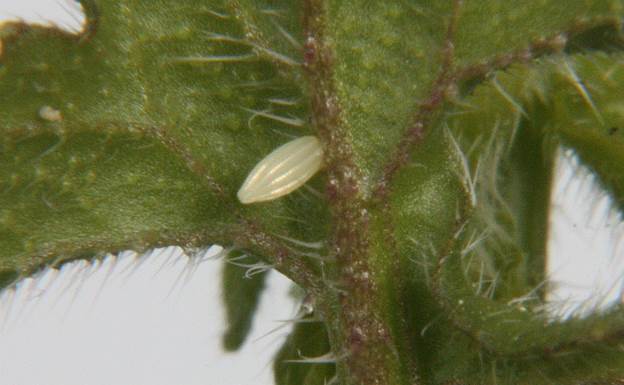
One. I was walking along Carey Road and I saw a female Cabbage White fluttering low down at foot level apparently ovipositing on a tiny all-but-unidentifiable (though possibly Raphanus) fragment of vegetation growing out from the cracks between the sidewalk paving stones. Sure enough, I found this egg on one of the plant fragments.
Pieris rapae (Lep.: Pieridae) Jeremy Tatum
Two. For some time, I have been corresponding with an Iranian astronomer at Shiraz University. I deviated from our usual astronomical discussions by asking him to photograph any butterfly he saw there. He duly photographed one, and the photograph arrived this evening – shown below. I was expecting something exotic and foreign, but it rather looks like our familiar Pieris rapae to me. (A bit of caution though – it might just be possible that it is something else.) It’s a little outside the area that I usually allow on this site (i.e. Vancouver Island), I admit.
Probably Pieris rapae (Lep.: Pieridae) Ali Mansouri
Jeremy continues: A saw a Red Admiral on the Mount Tolmie reservoir at 4:15 pm today, May 3.
Monthly Butterfly Walk – Message from Gordon Hart:
The first Butterfly Walk of the year will take place this Sunday, May 4. We will meet at the summit of Mount Tolmie by the reservoir at 1 p.m. After a look around for butterflies, we will decide on a destination from there. Car-pooling is encouraged, and we will try to return by 4 p.m. For any changes or updates, check this site, or the VNHS calendar at https://www.vicnhs.bc.ca/?page_id=1518
Here are some photographs taken by Ian Cooper on May 1.
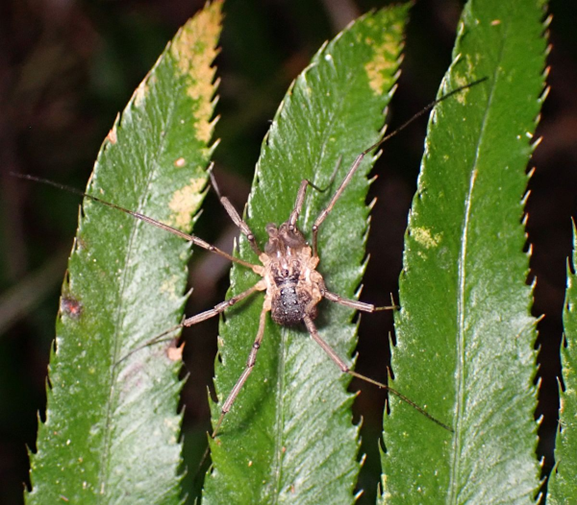
Probably Protolophus niger (Opiliones: Protolophidae) Ian Cooper
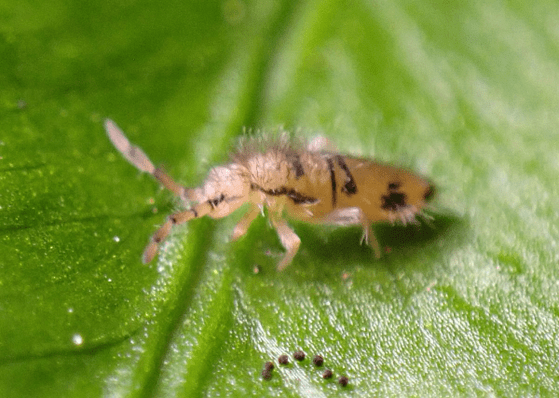
Entomobrya triangularis (Coll.: Entomobryidae) Ian Cooper
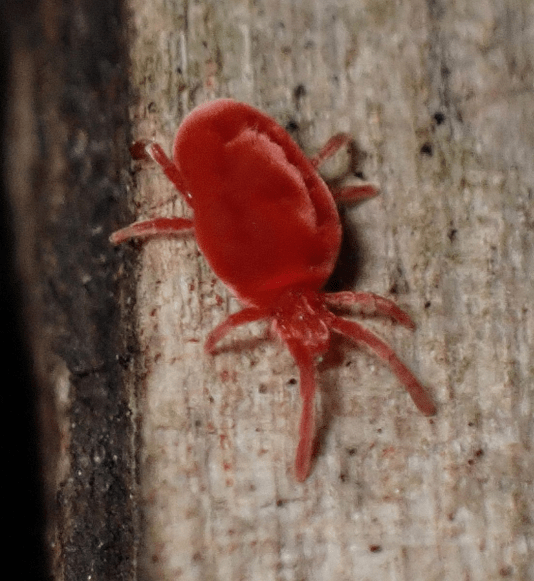
Giant red velvet mite Trombidium grandissimum (Acari: Trombidiidae) Ian Cooper
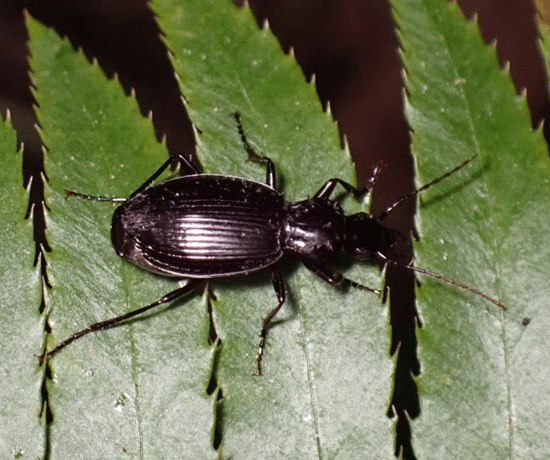
Ground beetle (Col.: Carabidae) Ian Cooper
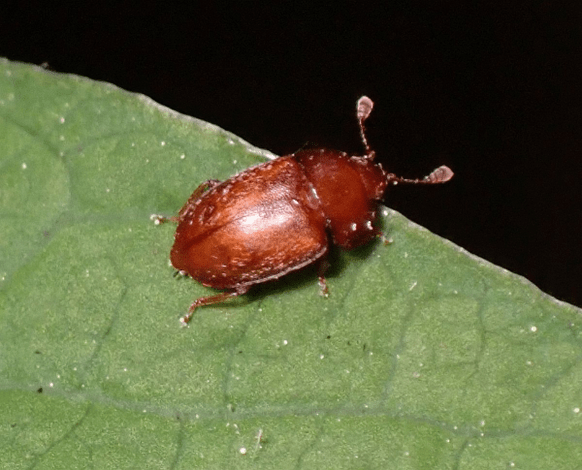
Sap beetle (Col.: Nitidulidae) Ian Cooper
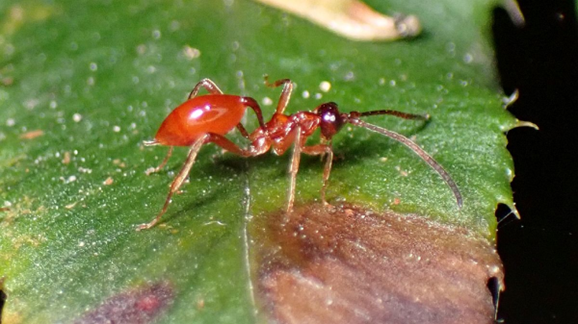
Wingless Parasitoidal Wasp, Gelis sp. (Hym.: Ichneumonidae) Ian Cooper
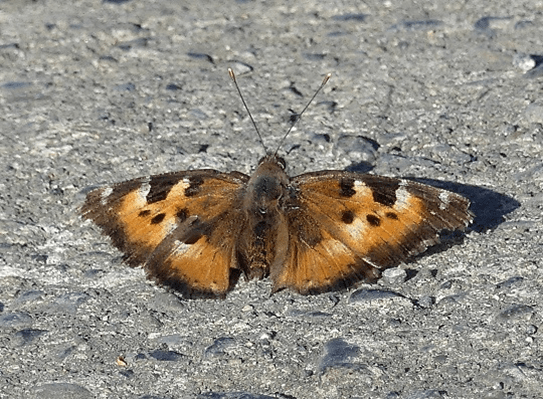
On May 1, on Mount Tolmie, Aziza Cooper photographed a California Tortoiseshell Nymphalis californica and a California Darner Rhionaeschna californica. Although both bear the names California and californica, they are very different animals.
California Tortoiseshell Nymphalis californica (Lep.: Nymphalidae) Aziza Cooper
California Darner Rhionaeschna californica (Odo.: Aeshnidae) Aziza Cooper
Jeremy Tatum asks: What is the name of our small blue Spring butterfly?
Over the past half-century its scientific name has varied among Celastrina argiolus, C. ladon and C. echo with various combinations and lumpings and splittings. We have usually used the English name Spring Azure.
In this site, I generally follow the scientific taxonomy of the Pohl and Nanz Annotated Taxonomic Checklist (ATC). The ATC recognizes numerous distinct species of Celastrina in North America, only one of which we are concerned with here on Vancouver Island, namely C. echo. The species C. argiolus, a name at one time attached to our butterfly, and somewhat similar to it in appearance, is now regarded as a distinct species that does not occur in North America. In the British Isles it is the butterfly known there as the Holly Blue.
Which of the numerous North American species should rightfully be called Spring Azure? Probably all of them should have an additional adjective before the name; perhaps none should be called simply Spring Azure, although maybe C. ladon has the greatest claim. The only species currently recognized here on Vancouver Island (although this may change) is Celastrina echo. I have generally used the name Western Spring Azure on this site. This has a slight disadvantage is that it might be interpreted as merely a western subspecies. To avoid this, perhaps Echo Blue might be a preferable name.
My Canadian Gage Dictionary asks us to put the stress on the first (not the second) syllable of the word azure. It asks us to pronounce the z as zh as in Marshal Zhukov – although to me this is a lazy pronunciation, and I prefer z. Gage allows us to pronounce the letter a as in cat or as in Kate; I prefer cat.
Here are some photographs taken by Ian Cooper along the Galloping Goose Trail, April 29.
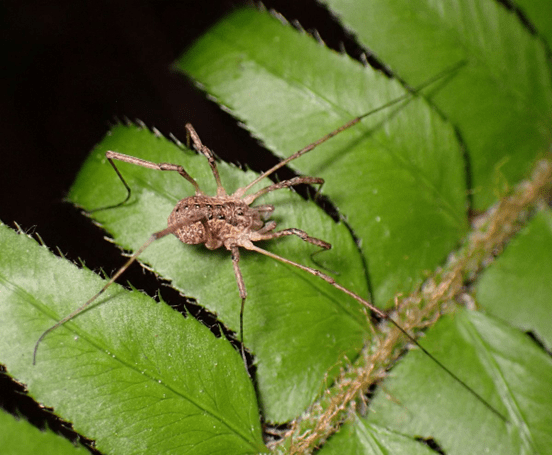
Harvestman – Protolophus sp. (Opiliones: Protolophidae) Ian Cooper
Barklouse – Psocus sp. (Psoc.: Stenopsocidae) Ian Cooper
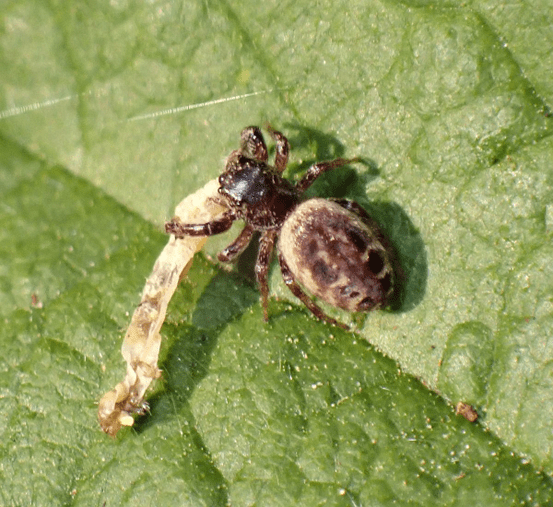
Jumping spider – female Metaphidippus manni.. (Ara.: Salticidae) Ian Cooper
Thanks to Thomas Barbin for the identification.
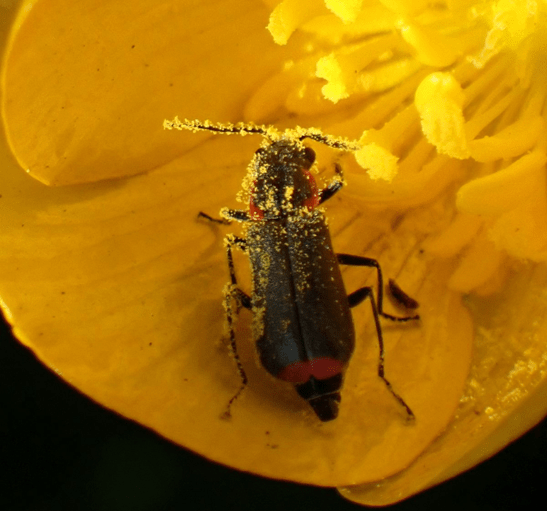
A melyrid beetle, probably Malachius sp. (Col.: Melyridae) Ian Cooper Thanks to Scott Gilmore for the identification.
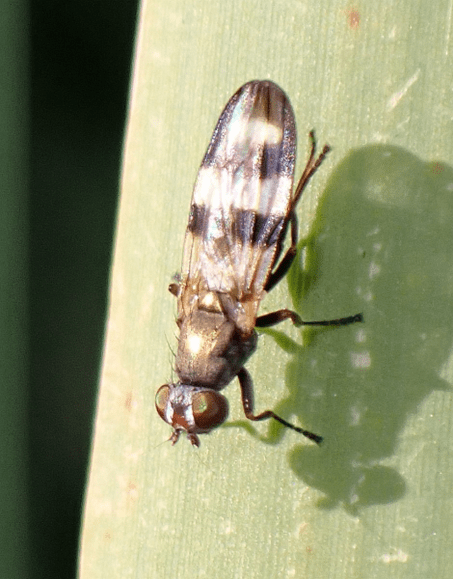
Picture-winged fly Chaetopsis fulvifrons (Dip.: Ulidiidae) Ian Cooper
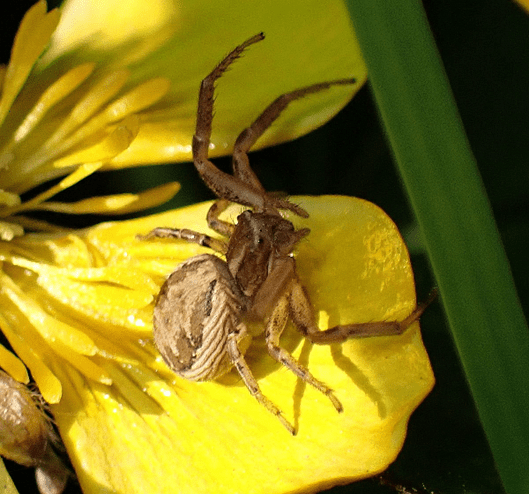
Crab spider Xysticus cristatus (Ara.: Thomisidae) Ian Cooper
Val George writes: This afternoon, May 1, I saw my first Red Admiral of the season at the summit of Mount Douglas – seems quite early for this species. The California Tortoiseshells and the Grey Hairstreak were still there, as were two Sara Orangetips.
Female Sara Orangetip Anthocharis sara (Lep.: Pieridae) Val George
Jeremy Tatum writes: I visited the pond along Munn Road today. There were lots of Western Spring Azures, but no other butterflies. I did, however, see the pretty litle geometrid Leptostales rubromarginaria. I would still like someone to see that moth (and also Epirrhoe plebeculata) ovipositing.
Monthly Butterfly Walk – Message from Gordon Hart:
The first Butterfly Walk of the year will take place this Sunday, May 4. We will meet at the summit of Mount Tolmie by the reservoir at 1 p.m. After a look around for butterflies, we will decide on a destination from there. Car-pooling is encouraged, and we will try to return by 4 p.m. For any changes or updates, check this site, or the VNHS calendar at https://www.vicnhs.bc.ca/?page_id=1518
Jules Thomson reports seeing a California Tortoiseshell on the Mount Tolmie reservoir yesterday (April 30) at 6:30 pm.
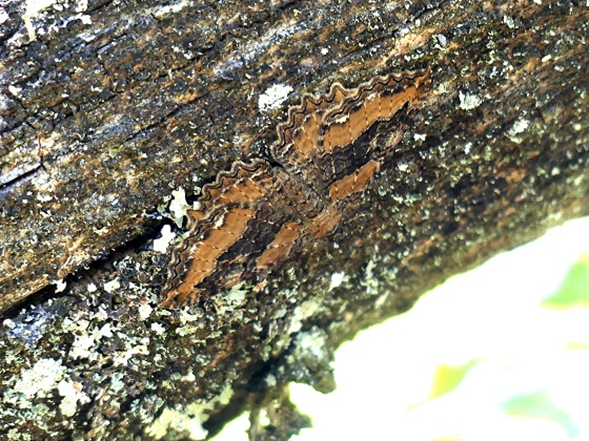
Aziza Cooper writes: This well camouflaged moth was on the west slope of Mount Douglas on April 30. I also saw one Sara Orangetip and 5 WesternSpring Azures.
Rheumaptera meadii (Lep.: Geometridae) Aziza Cooper
Jeremy Tatum writes: It may be hard to believe, but this is a colour form of the same species as that of Val George’s photograph on April 26. If any doubt, see the short fourth tooth. In case anyone doubts Aziza’s description of ”well-camouflaged”, this form exhibits what is known as “disruptive coloration”, in which sharply demarcated contrasting colours disguises the shape of the animal, so that, although the moth can be easily seen, it is not recognized as a moth or as anything else edible.
Ian Cooper took the photographs below on the late afternoon of April 29 by the Galloping Goose Trail between Grange Road and Burnside Road West.
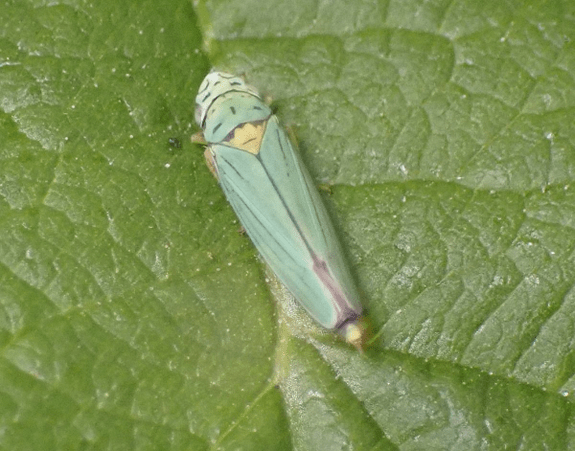
Blue-green Sharpshooter Hordnia atropunctata (Hem.: Coccinellidae) Ian Cooper
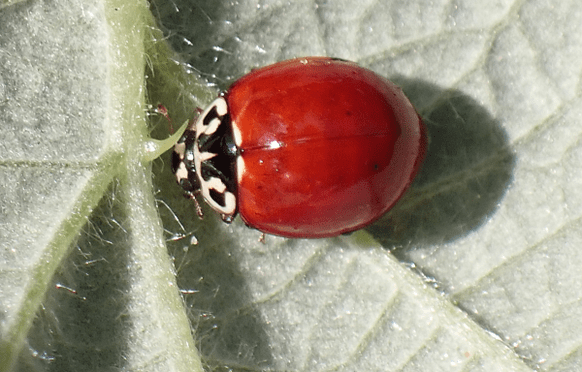
Western Polished Lady Beetle Cycloneda polita (Col.: Coccinellidae) Ian Cooper
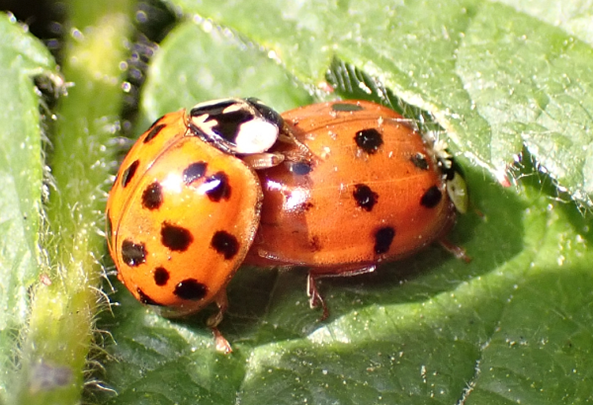
Asian Lady Beetles Harmonia axyridis (Col.: Coccinellidae) Ian Cooper
Jeremy Tatum writes: Although this is a very variable species, most of them can be told by the black M or W mark on the pronotum, well shown on this photograph.











 Invert Sightings