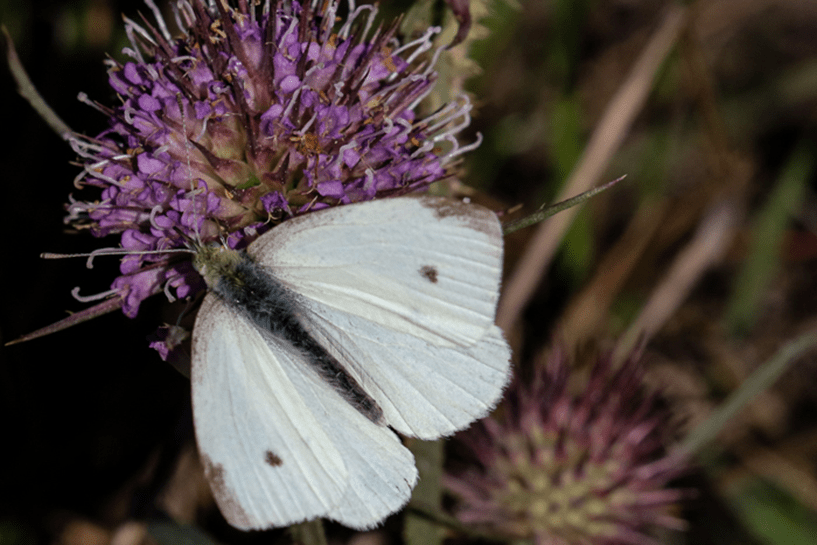
Marie O’Shaughnessy writes, from McIntyre reservoir, October 14: I was delighted to find three Cabbage White butterflies still fluttering around in the afternoon sun and warmth.
Male Cabbage White Pieris rapae (Lep.: Pieridae) Marie O’Shaughnessy
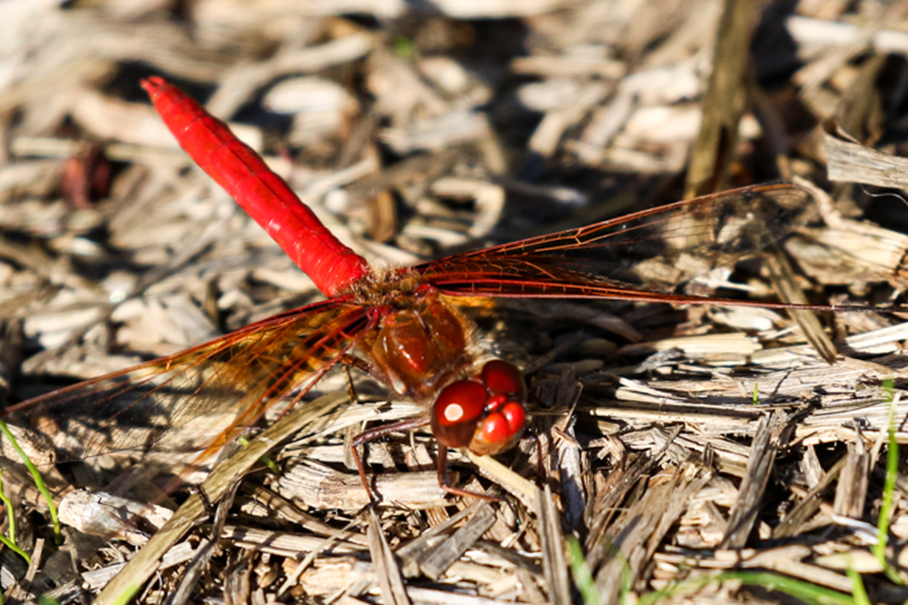
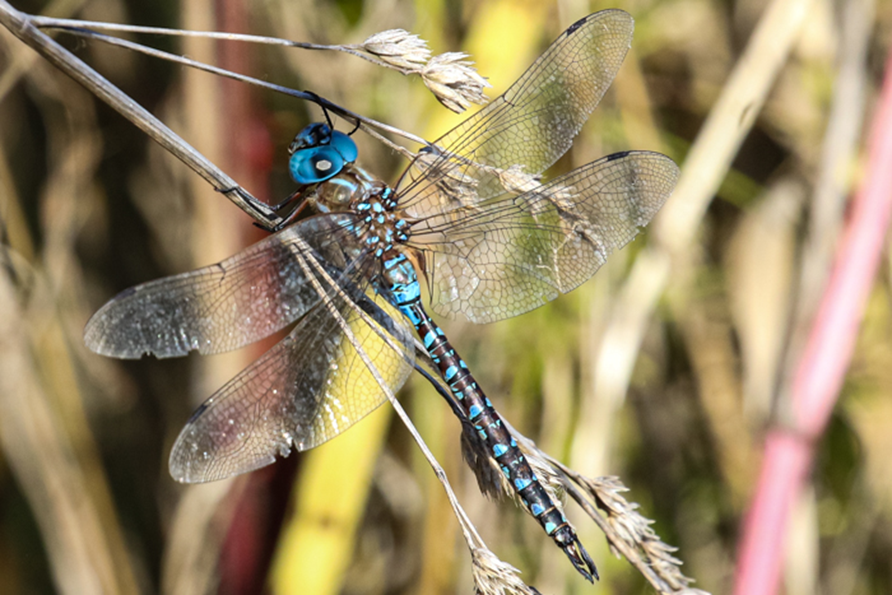
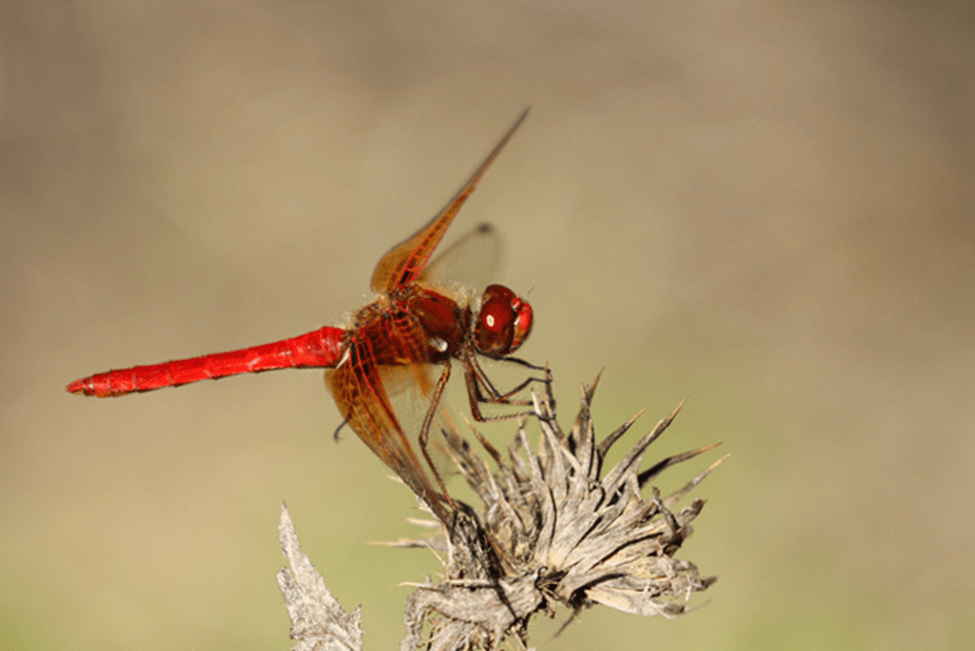
Dragonflies were a surprise too. There were five Cardinal Meadowhawks, one Paddle-tailed Darner, and three Blue-eyed Darners.
Male Cardinal Meadowhawk Sympetrum illotum (Odo.: Libellulidae) Marie O’Shaughnessy
Male Blue-eyed Darner Rhionaeschna multicolor (Odo.: Aeshnidae) Marie O’Shaughnessy
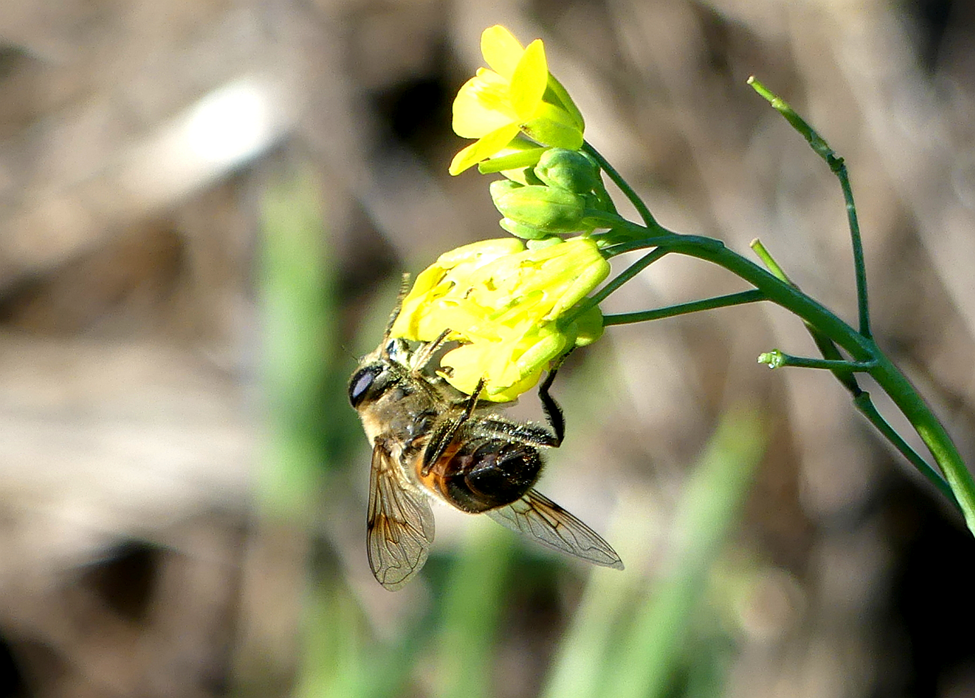
The butterfly season is not quite over yet – Aziza Cooper reports three Cabbage Whites from near McIntyre reservoir today, and Wendy Ansell saw another at Island View Beach. Aziza also photographed this fly in the Martindale valley today. Jeremy Tatum writes: It may be the common Narcissus Bulb Fly Merodon equestris, but I’m also thinking that it might be a species of Mallota. The wing venation looks like Mallota, but Mallota should have thick femora on the hind legs. If anyone can identify this fly with more certainty, please let us know.
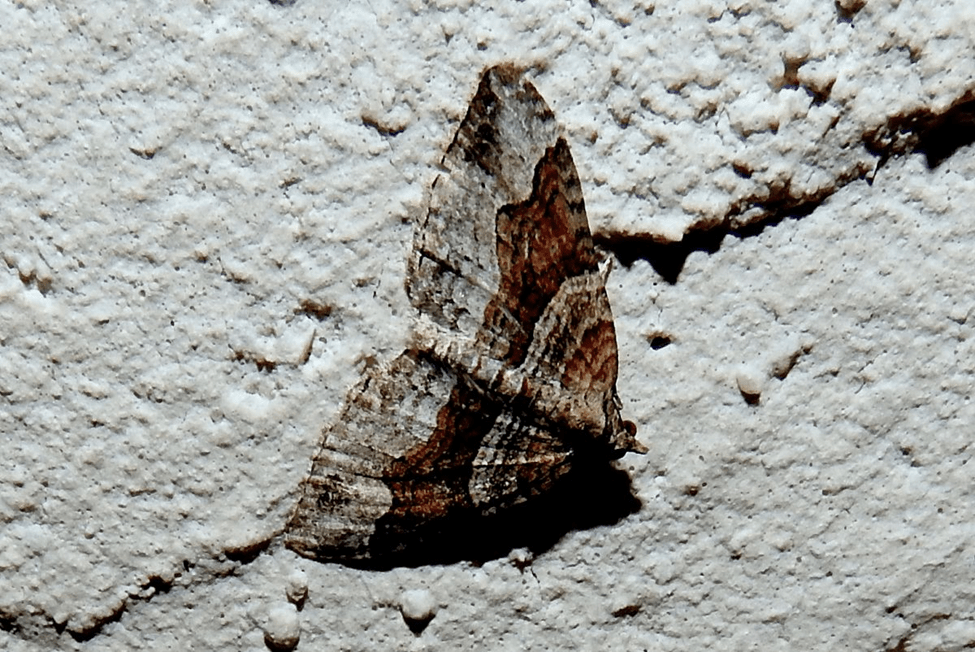
Marie O’Shaughnessy writes: There was an interesting moth on the ceiling overhang of my carport at lunch time on October 9.
Jeremy Tatum writes: It is indeed an interesting moth in that it is difficult to identify. It is either a Barberry Geometer Rheumaptera meadii or an American Tissue Moth Triphosa haesitata. The former species is quite variable, and there is a variation that looks very like a Tissue Moth. This is one of them, and we are not 100 percent certain which species it is. However, Libby Avis is “reasonably sure” (which is not quite the same as 100 percent certain) that it is R. meadii. Note that the fourth tooth on the outer margin of the hindwing is markedly smaller than the adjacent teeth; this is characteristic of meadii.
In case anyone is asking the question: “If two moths are so similar that no one can tell the difference, why are they not one and the same species?” A good question – but, writes Jeremy Tatum, the caterpillars of these two species are totally and utterly different, and obviously quite different animals.
Probably Rheumaptera meadii (Lep.: Geometridae) Marie O.Shaughnessy
Jeff Gaskin writes: On October 8, I saw a Red Admiral at the end of the berm near Admirals Road [a suitable place to find an Admiral! – Jeremy] in Cuthbert Holmes Park. Also, today, October 9, there were two Cabbage Whites in the Burnside/ Gorge neighbourhood.
There may still be a few Cabbage Whites around. Marie O’Shaughnessy saw three on October 7 on or around the McIntyre reservoir and the adjacent cabbage field.
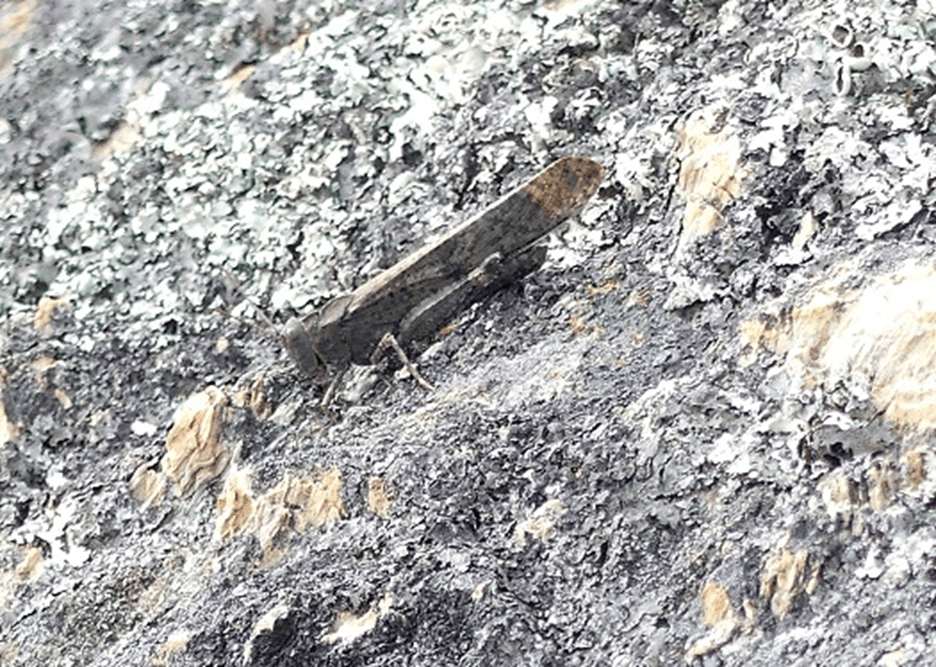
Aziza Cooper writes: On October 8, this grasshopper was at Harling Point. This is the grasshopper that can be mistaken for a Mourning Cloak because its wings are dark with pale edges. Jeremy Tatum writes: It can indeed – I have so mistaken it myself from time to time. It “official” name is the Carolina Grasshopper, but some people refer to it as the Mourning Cloak Grasshopper.
Carolina Grasshopper Dissosteira carolina (Orth.: Acrididae) Aziza Cooper
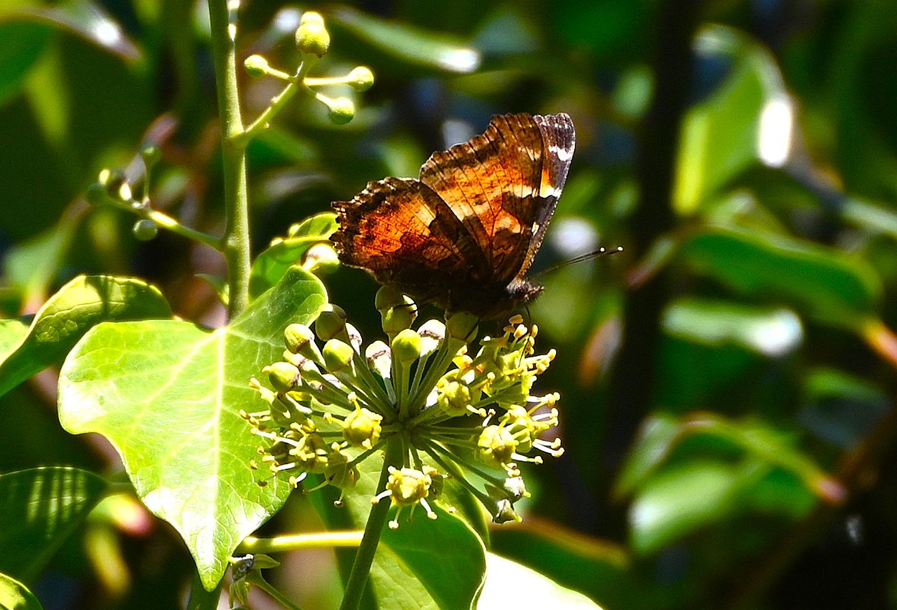
Geoffrey Newall reports two California Tortoiseshells from Beacon Hill Park on October 6. Here is a photograph of one of them nectaring on Ivy blossom. Ivy blossom is a good place to look for nymphalid butterflies at this time of year.
California Tortoiseshell Nymphalis californica (Lep.: Nymphalidae) Geoffrey Newall
Val George writes: These two moths, Udea profundalis and Xanthorhoe defensaria, were on the wall of my Oak Bay house this morning, October 8.
Udea profundalis (Lep.: Crambidae) Val George
Xanthorhoe defensaria (Lep.: Geometridae) Val George
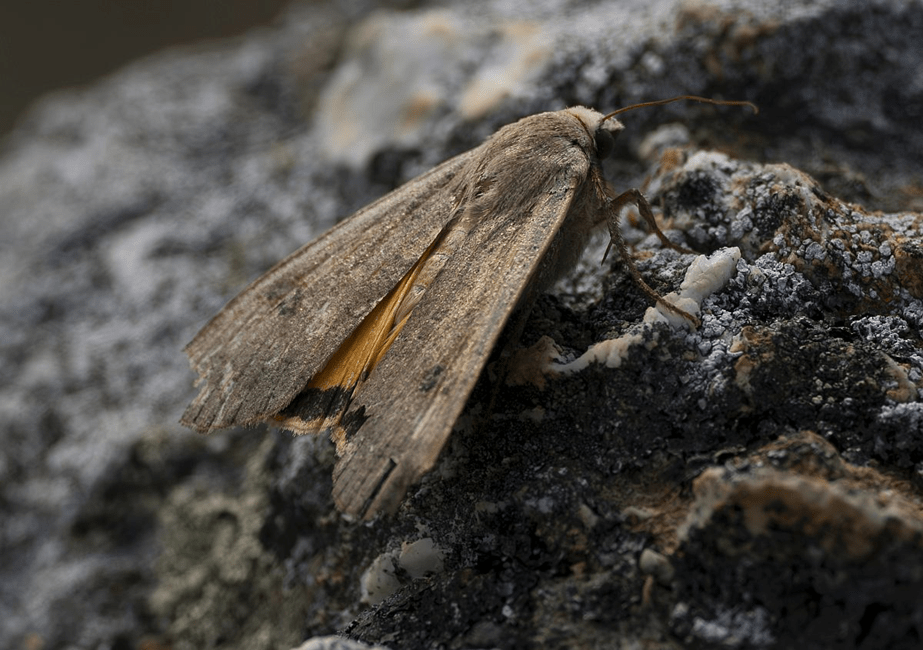
Gordon Hart reports that on October 7 he saw a Cabbage White at Cattle Point, and another along Foul Bay Road. He also saw and photographed a worn Large Yellow Underwing Noctua pronuba at Harling Point.
Large Yellow Underwing Noctua pronuba (Lep.: Noctuidae) Gordon Hart
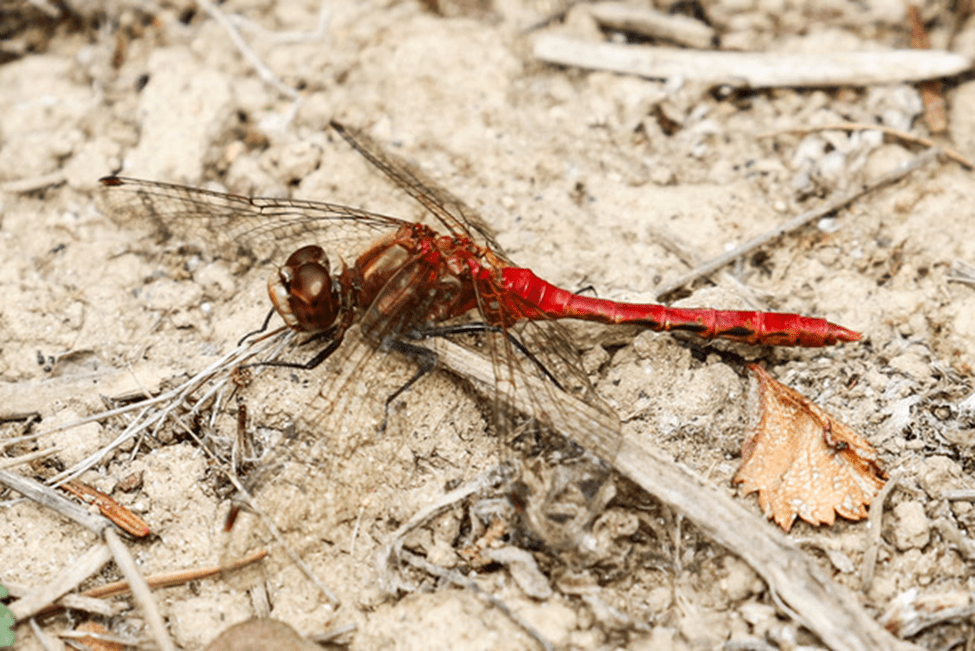
Marie O’Shaughnessy reports that she spent an hour at Beaver Lake Ponds on October 7 and saw one Cabbage White. She also saw a few Darner dragonflies, including about six Paddle-tailed Darners, and she saw and photographed an Autumn Meadowhawk (formerly known as Yellow-legged Meadowhawk – you can see why in the photograph) and a Striped Meadowhawk.
Autumn Meadowhawk Sympetrum vicinum (Odo.: Libellulidae) Marie O’Shaughnessy
Striped Meadowhawk Sympetrum pallipes (Odo.: Libellulidae) Marie O’Shaughnessy
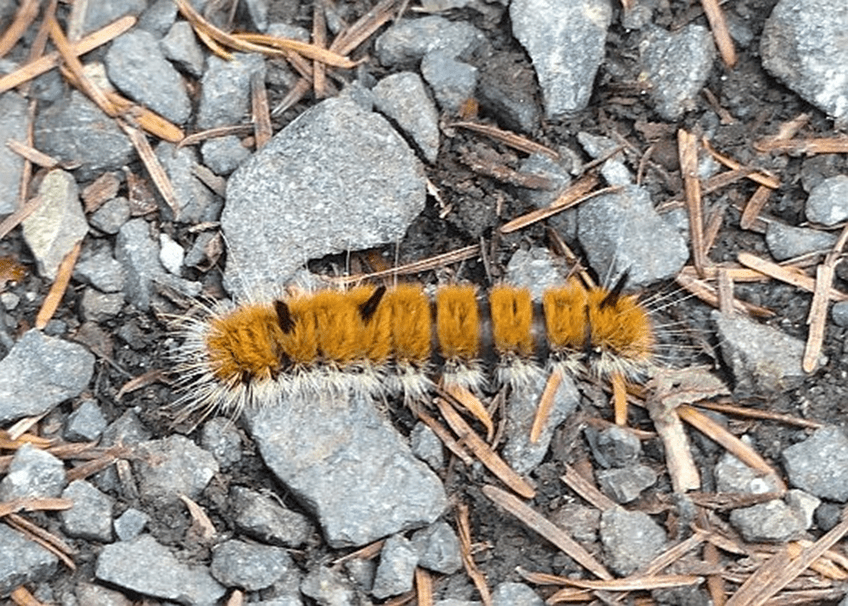
Aziza Cooper writes: On October 7 this caterpillar was on the trail in East Sooke Park. Found by Ren Ferguson. Jeremy Tatum writes: This is the caterpillar of Acronicta insita looking for somewhere to pupate. Moths of the noctuid genus Acronicta are known as dagger moths, because of a dagger-like mark on their wings. This particular species was known, until a recent name-change, as A. dactylina. In fact,it’s not really a name-change. It was originally described and named as insita in 1856. Sometime later, it was presumably rediscovered and given the name dactylina . The rules of nomenclature specify that the original name must have priority (with rare exceptions), so insita is not so much a name-change as a reversion to the original name.
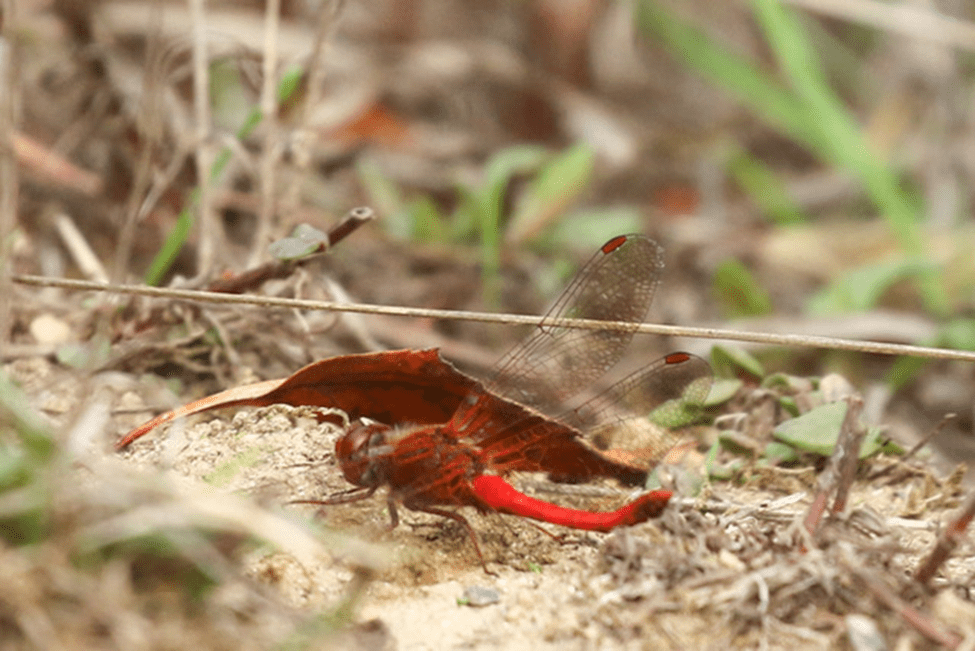
Marie O’Shaughnessy writes: Yesterday I spent an hour looking for Dragonflies and Butterflies at McIntyre Reservoir I was able to find seven Cabbage Whites and a further two in the Martindale Flats area. Also six Cardinal Meadowhawks and one darner in flight (possibly a Paddle-tailed).
Cardinal Meadowhawk Sympetrum illotum (Odo.: Libellulidae) Marie O’Shaughnessy
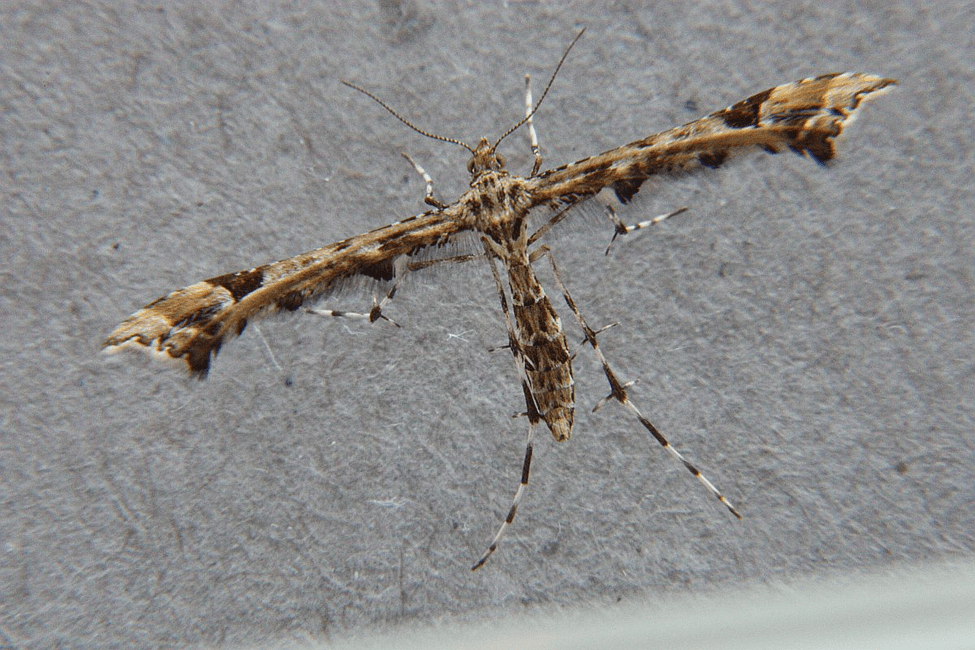
Jeremy Tatum found this moth at his Saanich apartment this morning, October 6.
Amblyptilia pica (Lep.: Pterophoridae) Jeremy Tatum
Jeremy Tatum writes: I saw a California Tortoiseshell on the Mount Tolmie Ivy patch at 4:00 pm this afternoon. Also, in the morning, two Cabbage Whites in Mount View Park.
The Ivy patch on Mount Tolmie is in spectacular full flower each year in early October, and in past years several nymphalid butterflies have been seen nectaring on it, usually in the afternoons, when it is in sunshine. One way (not the only way) to find it is to enter Mount Tolmie Park from the end of Rattenbury Place. That’s not an easy place to find on the map. Enter Fredrick Norris Road, go along Redwood Avenue and see if you can find Rattenbury Place, probably the shortest road in Saanich. At the end of the road there is a path between two houses, which looks like a private drive, but is in fact a public path going up to Mount Tolmie. If you can find that, you’ll soon find the Ivy patch, and, with luck, a nice nymphalid butterfly or so.
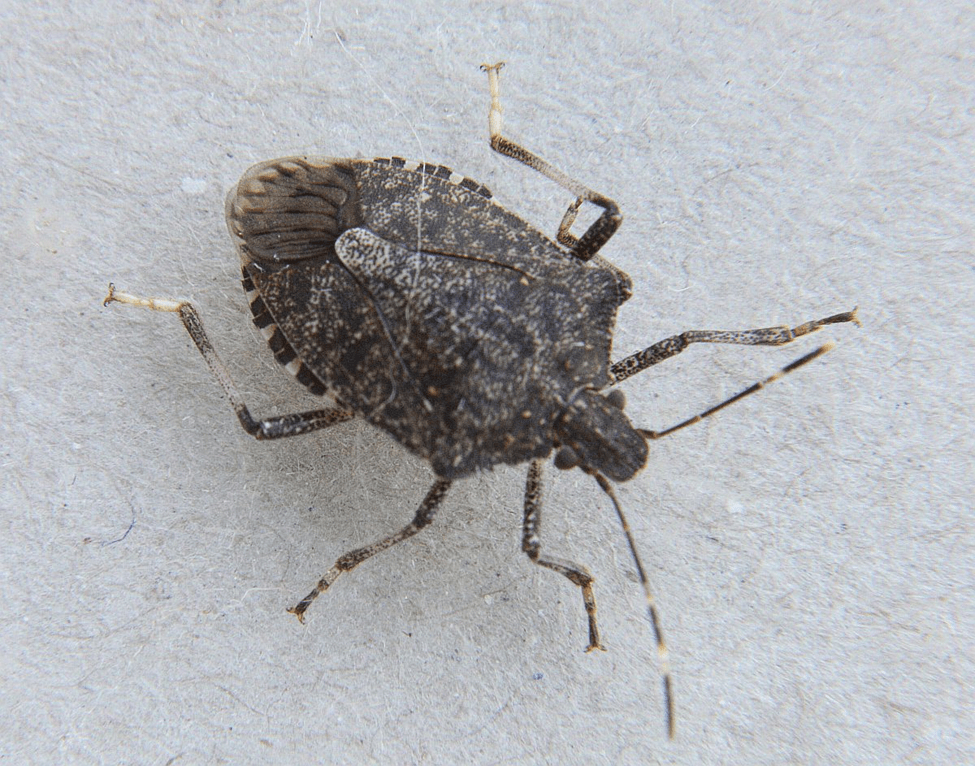
Those who have known me long will occasionally have heard me admonish someone for calling some insect or other a “bug”. Or you may have heard me say: “That’s not a bug, it’s a beetle.” Now this is a bug (from my Saanich apartment this afternoon):
Halyomorpha halys (Hem.: Pentatomidae) Jeremy Tatum


 Invert Sightings