
2025 September 1 morning
There was no posting on August 31,
On the posting of August 27 evening, we showed a caterpillar found by Mike and Barb McGrenere, which, writes Jeremy Tatumj, I wasn’t sure was Schizura unicornis or S. ipomoeae. I am now “fairly sure” that it is the latter, although I may need to wait until the adult moth emerges next spring to be absolutely certain.
There have been some taxonomic and spelling changes for the three unicorn-like moths that I have seen in our area.
Old names:
Schizura unicornis
Schizura ipomoeae
Oligocentria semirufescens
New names:
Coelodasys unicornis
Schizura ipomaeae
Oedemasia semirufescens
S. ipomaeae is named after the Morning Glory flower, Ipomoea sp., and should have been spelled S. ipomoeae. However, in the original scientific description, it was misspelled S. ipomaeae, and so this is the spelling that has to be used for the scientific name of the moth. The moth has the English name Morning Glory Prominent.
A similar situation exists for the Bedstraw Hawk Moth Hyles gallii. It is named after the plants known as bedstraws Galium sp., and so the moth should be H. galii. However, it was misspelled gallii in the original scientific description, and so the spelling gallii stands for the moth.
There is a small difference between these two cases. Whereas the caterpillar of the Bedstraw Hawk Moth eagerly feeds on bedstraws, no one seems to know what connection (if any – probably none!) the Morning Glory Prominent has with the Morning Glory flower.
In order to help with the identification of Mike and Barb’s caterpillar, I took some close-up photographs – see below.
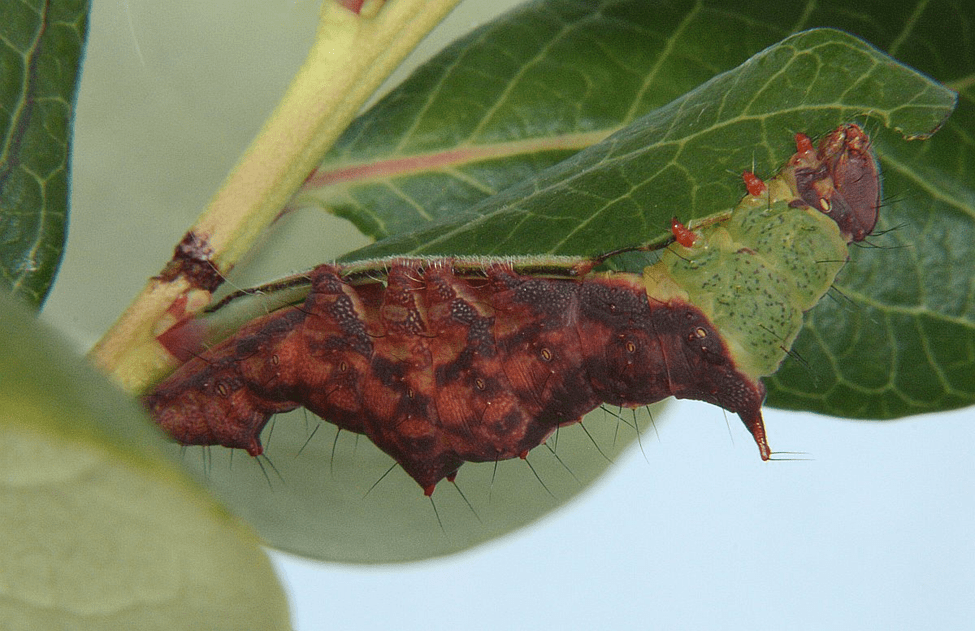
Probably Schizura ipomaeae (Lep.: Notodontidae) Jeremy Tatum
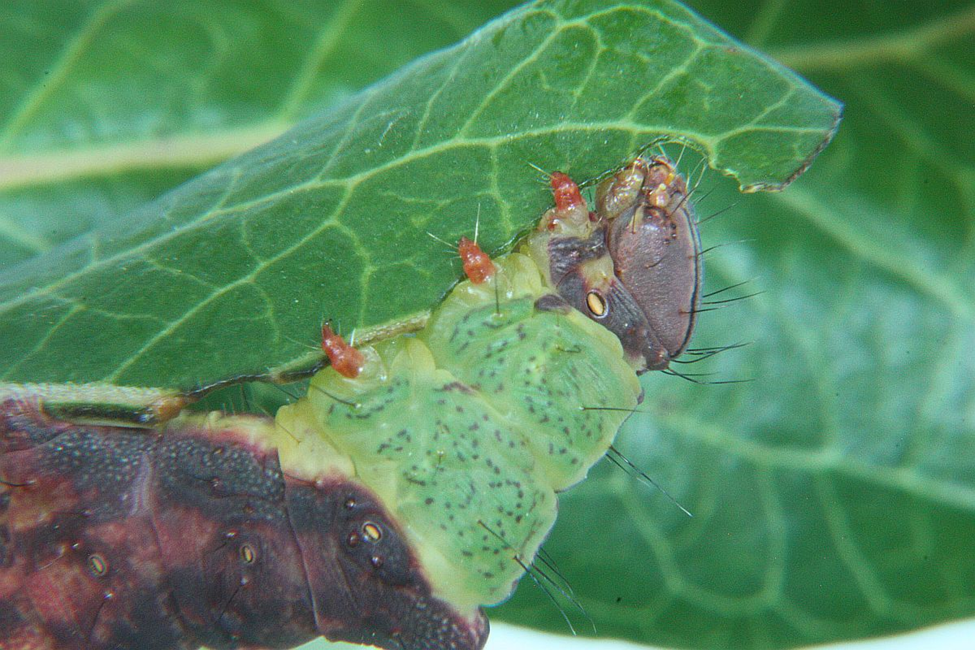
Probably Schizura ipomaeae (Lep.: Notodontidae) Jeremy Tatum
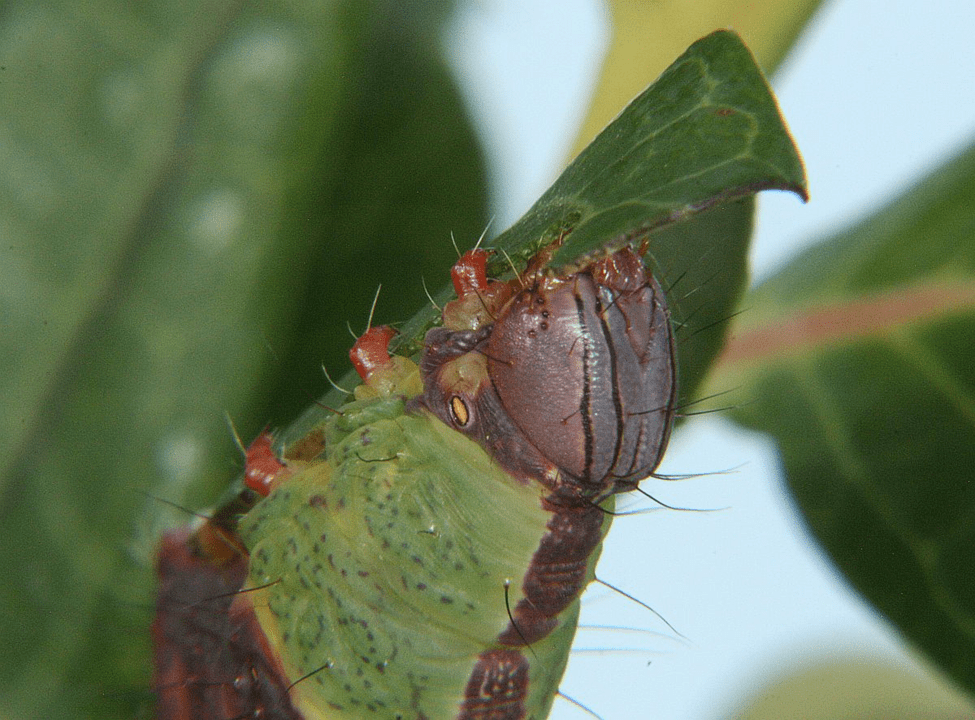
Probably Schizura ipomaeae (Lep.: Notodontidae) Jeremy Tatum
 Invert Sightings